
The future must be prepared to defend itself against a forming army of oblivious do-gooders.
Can you not see it? Well, how could you? In our world today, it’s rampant, a kind of shortsighted goodness crying out for glasses. A feel-good immediacy heralded as the height of morality, regardless of any potential degradation into evil over time.
We who still make our way in the world, who still have some hope of societal recognition (our place in the community!), naturally enough tend to prefer to be seen as good. Goodness confers status, after all, generally opens doors.
But in a dominant culture that condemns looking back at past eras nostalgically (the cult of progress!) and that is also far too sensually inclined to meaningfully interrogate the abstract concept of the future, who are the arbiters of good? A secular priestly class that looks little beyond the day, that wields far more power than vision. Thus, that which is officially pronounced as good is synonymous with that which feels good today (an extreme bias in favor of the hungry today over the hungrier to come). That which is good tomorrow? Only a consideration if it first flatters the day at hand, and its people too.
And we identity seekers, who want goodness sewn on us next to our name tags, what can we do but go along with it?
I am too agreeable for all this, in any case. While not as concerned with being seen as good as some others I know, I do have a distinct enthusiasm for not being seen as bad. Let’s drop this and move on to lighter subjects. There’s a park nearby. Why not go and feed the squirrels?
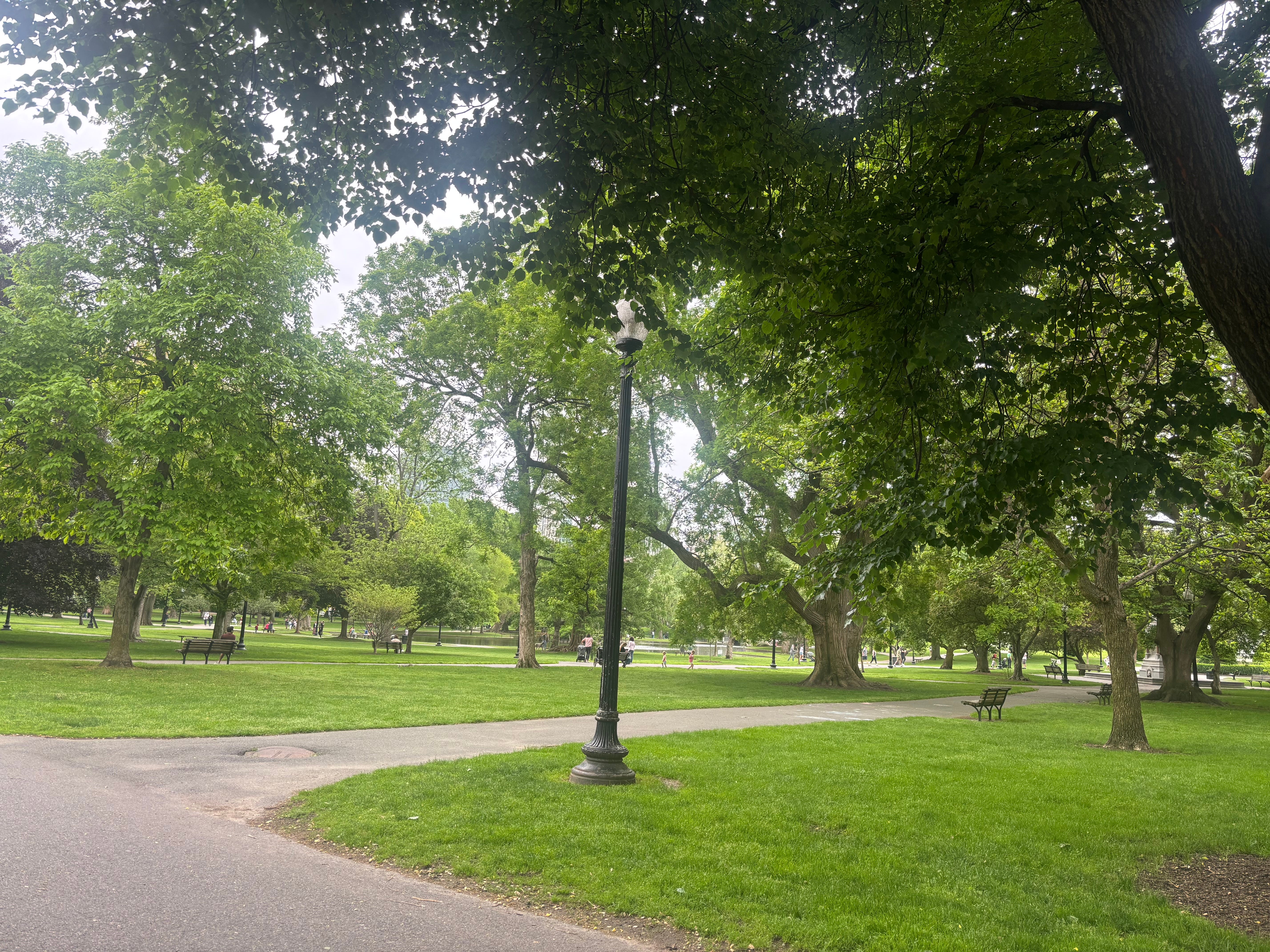
Opening a bag of chips, I walked over to the Public Garden, found a bench and in no time had my first squirrel customer (as it were). While appearing to enjoy what I gave him, the poor guy remained visibly anxious, twitching at each and every sound in the vicinity. I decided then and there: Today, I will teach him not to fear me and, in so doing, spread just a little more love in the world.
After ten consecutive chips, a tentative trust did begin to develop, until it was suddenly interrupted by a passerby who had seemingly been watching me for some time and, by way of introduction, demanded:
“Stop it! As a rule, we all learn by rule, not by exception. The squirrel cannot learn to lose its fear of you without blunting its overall fear response mechanism. Your gifts are a slow-burning danger.”
The squirrel quickly departed at his adamant tone. The man, leaving his opinion, also walked off. So be it. This sunny fall day, I didn’t need to do anything at all to enjoy this bench. Sitting and watching the people picnicking in the grass, the tourists walking by, the dogwalkers, the photo hounds and, yes, the many squirrels running up and down the trees, I dozed off.
I dreamt there was a great budding social movement among squirrels in this tame public park (maintained by an extensive parks budget). Having lost their natural fear after long gorging on breads, seeds, and popcorn from many a park walker and their children (their dogs, however, were stingier), they began to believe that what was working for them simply worked. When they heard of other squirrels, no doubt less fashionable, living outside the city park center and still retaining the old fear instinct, they scoffed at such backwardness! Nay, ignorance!
So they initiated a program by universal decree to all squirrels everywhere! A forest squirrel was as much bound by it as a city one. To show fear was to risk shame and exile from the greater squirrel community, to lose all chance at finding a mate.
Never on a mountain trail, but beside many of the trees in the Public Garden, the most ardent supporters put up signs reading: “Fear has no home here. In this tree, we believe in love.”
For whatever reason, squirrel numbers began to dwindle, but the squirrels safe in the park just kept noting their own crowds and continued to feel better about themselves (the community feel of participation in a movement, nay, a squirrel revolution!), fattening up more on whatever American junk food they were readily given, though fattened up most of all by their own sense of righteousness.
I began to ponder. These good squirrels, does their goodness strengthen or weaken the squirrel population taken as a whole?
The tame felt themselves morally superior precisely because of their tameness. Their specific adaptation to their specific environment, they formed a universal ethic around. They did not contend with coyotes. Hardly an owl or hawk chose such an urban hunting ground. When they asked, “What would I do if I were that squirrel?”, they never also included the question of setting. The squirrel they imagined was always another park creature. And, really, how could it be otherwise? Heck, they’d never even been in a forest!
Soon enough, I realized, this would be true for all squirrels if this program remained in place long enough. And the wild squirrel as a species would face extinction without the courage to become disagreeable.
Then I woke up, having forgotten my dream, and dumped out the last few chips in my bag, knowing it’d make some squirrel’s day.